Friday, October 16, 2009

A Catch-Up Post


The longer I go after posting to this blog, the harder it is to get started again. So here's a bit of a catch-up for the last three weeks.

Mount St Helens

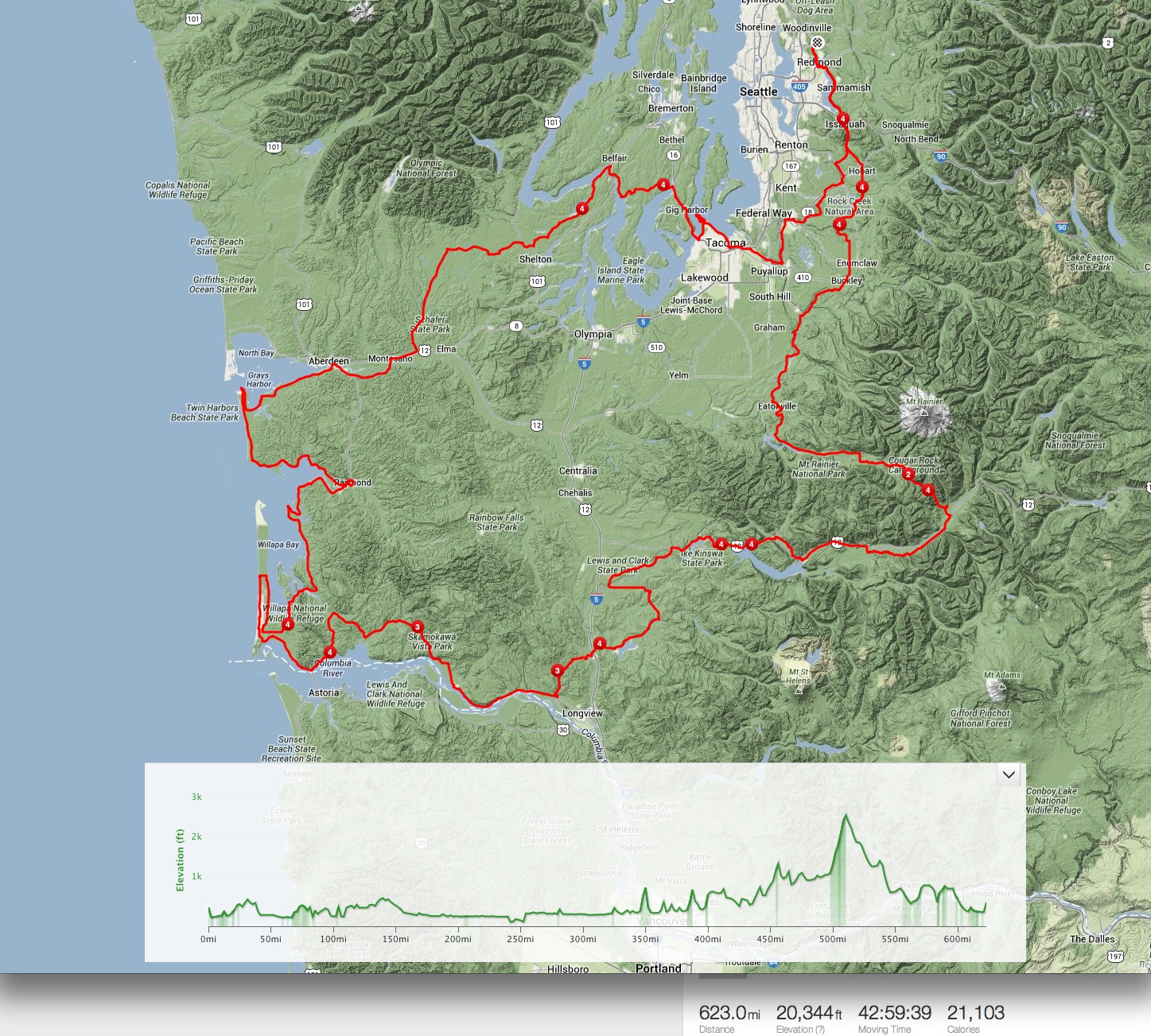
After flying high with a fun 1200k brevet on the plains and a fastest-ever 200k permanent, I came crashing back to earth. In Icarean fashion, it was a too much ascent that caused the big descent. On a Wednesday (9/23) a collection of usual permanents suspects met in Winlock for a permanent up to Johnston Ridge Observatory on Mount St. Helens (and back). For years, I've meant to do the organized Tour de Blast ride, but somehow never got around to it. Geoff's Winlock-MSH-Winlock permanent wraps the same climbing in another 40 or so miles of gentle rollers to get the magic 200k distance for the permanent.

My performance peak came early as I staved off a convenience store stop in Castle Rock with a timely spotting of an espresso serving bakery. After that, it was a bit of an ugly-fest for the rest of the way up to Johnston Ridge. I augmented my usual climbing prowess with a series of rookie mistakes - not enough sleep, not enough food, not enough hydration, and starting the climb too hard. The 4000 foot climb to Johnston Ridge is interrupted by a 1500 foot down hill, making it more like a 5500 foot climb (somehow the whole route was 9000 feet of climbing). By the time I reached the top I was a bit of a wreck.


But it was a beautiful course with great views of the mountain, so it was a good day anyway. More than 50% more elapsed time than the last 200k (nearly 12 hours total), so back to normal!


Barlow Trail

The next order of business (Saturday, 9/23) would be the Barlow Trail 300k put on by the Oregon Randonneurs. Michael Wolfe, who has recently moved from Portland to Seattle, created this route, pre-rode it during the summer, and then had to postpone the event because of record heat. (Warmer, even, than that I enjoyed on the XTR.) Somewhat humbled by my torturous ascent of Mount St. Helens, I asked Michael about the climbing on this ride. "I'm not gonna lie to you, this is a challenging ride" was not really the reassurance that I sought. My usual riding buddies were iffy as well. Geoff thought that some rest would be a good idea. Vincent was about to leave for the Endless Mountains 1240. Might good sense prevail? Not likely - there was a ride to do. As Geoff's e-mail put it, "Sanity is overrated; suffering is temporary; I’ll be there." So Friday, Geoff, Vincent, Michael, and I are carpooling to Portland. Well, to Sandy, OR, where the ride would start.

The ride was spectacular. Michael was right, it was challenging, but the suffering was modest. We followed the Clackamas River upstream in the morning.


We left the river to climb through the forest on some delightful roads.


One in particular was made all the more delightful by a relative lack of traffic. The paucity of cars could be attributed to the fact that instead of a bridge over Anvil Creek, the road simply ended on one side and restarted on the others. No problem for intrepid randonneurs, but not so good for cars.


We screamed downhill towards Maupin and the Deschutes River. Without the incinerator heat present on my only other trip to Maupin (on XTR), the town seemed quite pleasant. I even felt like eating this time. Geoff and Vincent joined me for a nice sit-down lunch. As with the XTR, we left Maupin for a stretch downriver and upwind along the Deschutes.


A familiar climb brought us out of the river to Tygh Valley. The painful, guardrail-sit inducing, never-ending climb up Tygh Ridge from the XTR was not on this route. Instead we headed for Wamic Market,  climbing out of the valley on a different road.


After fueling up at the market, we headed into the hills on the Barlow Road Route towards Barlow Pass.


We felt pretty good on this stretch and climbed well.


It was dark when we reached the summit and then descended and climbed to the last control in a chilly Government Camp. At this point I was acutely aware of my mistake - forgetting my arm and knee warmers - so I begged for a soup stop before going on. The tomato soup at the Ice Axe Grill did the trick. After donning every item of clothing I had with me, including my always-carried but seldom-used Gore jacket, we zipped down the hill to pizza and beer at the finish in Sandy.

A great ride. Glad I didn't miss it.


Watching a Race

The following weekend brought something different. Bob Brudvik and I headed down to Southern California to crew for SIR member Chris Ragsdale on the Furnace Creek 508 ultramarathon cycling race. Being in the crew van gave us a front row seat for Chris's impressive win over rival (and winner of the last three FC508s) Michael Emde. The FC508 bills itself as “The Toughest 48 hours in Sport” with a race course that is 509.58 miles long and has a total elevation gain of over 35,000′, while crossing ten mountain passes, and stretching from Santa Clarita (just north of Los Angeles), across the Mojave Desert, through Death Valley, to Twenty Nine Palms. An already difficult event was made even more challenging this year by DNF-inducing winds gusting to 60mph+ (and not tailwinds, either!).


Sunrise

Watching a race is all well and good, I suppose, but I needed a ride. Happily Geoff was game for a weekday ride up to Mt Rainier on the Sunrise Climb permanent from Black Diamond. A picture is worth a thousand words.


A wonderful day.


Sunday, September 20, 2009

Something Different

I'm not known for speed. In 2002, some SIR riders and visiting riders got together to carpool in a small caravan from Seattle to the Rocky Mountain 1200 in British Columbia. I warned the other driver that some regrouping might be necessary because, as I put it, "I drive kinda slowly." Greg Cox heard this and exclaimed, "Geez, don't tell me you drive that way too!" Not much has changed in the years since.

Fresh off my dawdling ride of the Last Chance 1200, yet oddly emboldened by how good I felt on and after the ride, I suggested to my fast friends Bob Brudvik and Robin Pieper that we go out this weekend and ride a 200km permanent for speed. We picked the Three Rivers Cruise, a relatively flat (3000ft according to my Garmin), but still scenic, ride and we lucked into a beautiful day.

We rode three versions of a fast paceline throughout the ride: Bob pulling Robin pulling me, Robin pulling Bob pulling me, and Robin and Bob side by side pulling me. To be fair, I think I may have been in front for a kilometer, early in the ride. So call me the Sandy Pittman of the ride, short-roped to the finish. They pulled when I could hang on and they slowed when I drifted off the back. Very generous.

And it worked. We finished in 7:30. (Elapsed time was actually 7:25, but we started 5 minutes past our scheduled start time. Knocked 1:05 off my previous best 200km time. We averaged 30km/hr for the 6:40 that we were on the bike. Absolutely outrageous. It may take me longer to recover from today's ride than from the Last Chance 1200km.

As a footnote, today's ride pushed my total randonneur event distance for the year to 11,604km, another personal record (I rode 11,541km in 2007). What a fun year it's been!

The riders in Marblemount:


The bikes in Day Creek. Guess whose bike has the most stuff on it?


Speed graph and map from Garmin.


Monday, September 14, 2009

Party on the Plains


Reader note: If you are seeking an epic tale of rando suffering, you'll need to look elsewhere. Looking for a story of one lonely randonneur fighting time cutoffs, sleep deprivation, relentless hills, and epic weather? Move along.

"You're going to Colorado for a 1200k? Wow. That will be scenic. And difficult."

"Well, actually we're starting east of the mountains and heading further east into the plains."

"Oh. [Long pause]. Um, why?"

"Because I've never been to Kansas?"


In truth, Kansas never exerted much of a pull. I'm just drawn moth-like to the flames of these 1200k events. Each brings some unique adventure and a group of old and new friends with whom to share it. Colorado's Rocky Mountain Cycling Club's Last Chance 1200k would be my eighth different 1200. Even the repeated 1200s have offered a different experience each time. Variations in the scenery, in the terrain, in the local culture, in the rider field, in my fitness, in the weather, in my approach, and in a multitude of other factors yield vastly different stories for each 1200.


For me, the theme of the 2009 Last Chance 1200 would be to relax and enjoy the party. With relatively friendly terrain, the event is only as difficult as the weather makes it. I had heard stories of riders seeking shelter from near-tornado conditions, of soaking rains, and of wicked winds. The possibility of high temperatures frightened me as well; as I was reminded on John Kramer's XTR 600k earlier this year, heat is not my friend. But the weather gods would smile benignly on my ride. Temperatures ranged from upper 40s to 80 (F), well within the comfort range of my SIR blue wool jerseys. Rain fell only on part of the last day of my ride and was relatively light - more Seattle misting than diluvian soaking. Winds blew weakly when head-on and from the sides when strong.

Wednesday - 250 miles to Atwood

At an astonishingly early time of 3AM, 36 riders headed off in the dark towards Kansas. About half that group held together to the first control in Byers, Colorado. In contrast to the confusing cue sheet of my last 1200 in Scandinavia, the Last Chance cue sheet was a model of simplicity. Only the first 70 miles and the last 100 miles had turns. The 580 miles in between were a giant out-and-back on US-36. The only good opportunity to get lost and accrue bonus miles came in the dark on the first day on the way to Byers. As a result, many of us saw the wisdom in staying with a big group that included the ride organizer, John Lee Ellis.


I worked harder than planned to stay with this well-guided group and dropped off the back just before Byers as the sun came up. Super-volunteer Eric Simmons had brought a truckful of breakfast burritos for the riders.


The remaining 180 miles of the first day passed uneventfully. I rode with a shifting group of riders in about the third quartile of the field, sticking to my plan to stop at every possible source of nourishment from Colorado into Kansas and to enjoy the scenery(?).


Along the way, Paul Rozelle was corrupted by the ride-for-fun posse and abandoned his plan to qualify for RAAM (again, but this time on fixed gear). Sharon and Vickie from Texas were incorruptible and did ultimately qualify for RAAM. I rolled into Atwood with Paul, Bill Olsen (on his 4th 1200 of 2009), the Florida tandem of Alain Abbate and Viktoriya Shundrovskaya, and their fellow Floridian Hamid Akbarian. Setting a tone for the rest of the ride, Paul, Bill, and I stopped first at the convenience store for some tall cans of 3.2 beer.

Charlie Henderson (RUSA #6) and Jim Kraychy manned the Atwood control and doled out pizza and room assignments. The no-rush plan firmly established, we opted for a 7+ hour stop and a 3AM departure.

Thursday - 220 miles to Kensington and back

Bill, Hamid, the two Pauls (Paul Rozelle was joined by Paul Shapiro), and I rode into the pre-dawn fog with a morning plan that would repeat itself for the rest of the ride. Pre-departure snack, ride to sit-down breakfast in next town, arrive in next town to find eatery closed, curse and grumble, ride on to next town, and finally enjoy a wonderful breakfast in the second town. On Thursday, we landed in the Town & Country Kitchen in Norton, Kansas, where a kindly waitress brought piles of food, pitchers of water, and bottomless coffee cups.

Riding 60 miles before breakfast put us more than halfway to the turnaround point of the ride in Kensington, Kansas. With one relatively brief stop in Phillipsburg, we arrived at Kensington just after noon. It was 11:20 by my watch, so I was disappointed to discover that the post office was closed for lunch. I would have to deposit the ceremonial postcard in the mailbox rather than handing it to postmistress Beverly. Absent any spatial navigation challenges in the Kansas part of the ride, we contented ourselves with temporal confusion arising from keeping official "ride time" (Mountain) on our watches, while the locals went about their business on Central time.


A nice surprise offset the disappointment of the closed post office. As we rolled down the main street of Kensington, I spied a familiar looking flash of blue. A pedestrian sporting a blue wool Seattle Randonneurs jersey? How was that possible? Well, SIR's own Guy Oldfield has a place in the next county and came out to man a table covered with pie and other goodies. A welcome sight.


Heading back west, the morning's light headwind became a happy tailwind blowing us quickly to lunch back in Phillipsburg. At the town's fine sandwich establishment, a Subway, we fueled up for the 90-odd mile return trip to Atwood. Also patronizing the Subway were SIR's Ian Shopland and the Colorado tandem team of Beth and Brent Myers. Our six single bikes and two tandems would ride most of the way back to Atwood more or less together, interrupted by stops in Norton and Oberlin.

In the dark on the final stretch, the unintelligible but unmistakably angry screams of a parked eastbound trucker interrupted the night's stillness. We shrugged it off and continued back to Atwood. Paul, Paul, and Bill stopped off at the convenience store for more yummy 3.2 beer, a somewhat inopportune mission, as they were greeted by the local sheriff investigating a 911 complaint of cyclists all over the road. Our 18-wheeler driving friend was apparently quite unhappy to share the relatively deserted road with any 2-wheelers, even those traveling the other way. With two lawyers among the three riders in the store, not much happened and we were soon again enjoying pizza and beer and the luxury of 12 hours "in the bank" (up from 10 when we arrived in Atwood the previous evening). We made a plan for another 3AM departure and headed off to bed.

Friday - 180 miles from Atwood to Byers

Deja vu all over again. Although the cook could be seen in the window, the diner in Bird City was still closed when we arrived for breakfast. So, on to St. Francis, another 15 miles. A desperate inquiry in the local convenience store yields a recommendation that we stop for breakfast at the bowling alley, of all places. To our surprise and delight, breakfast was delicious. Closed lanes squelched the thought of a bowling a frame or two for dessert.


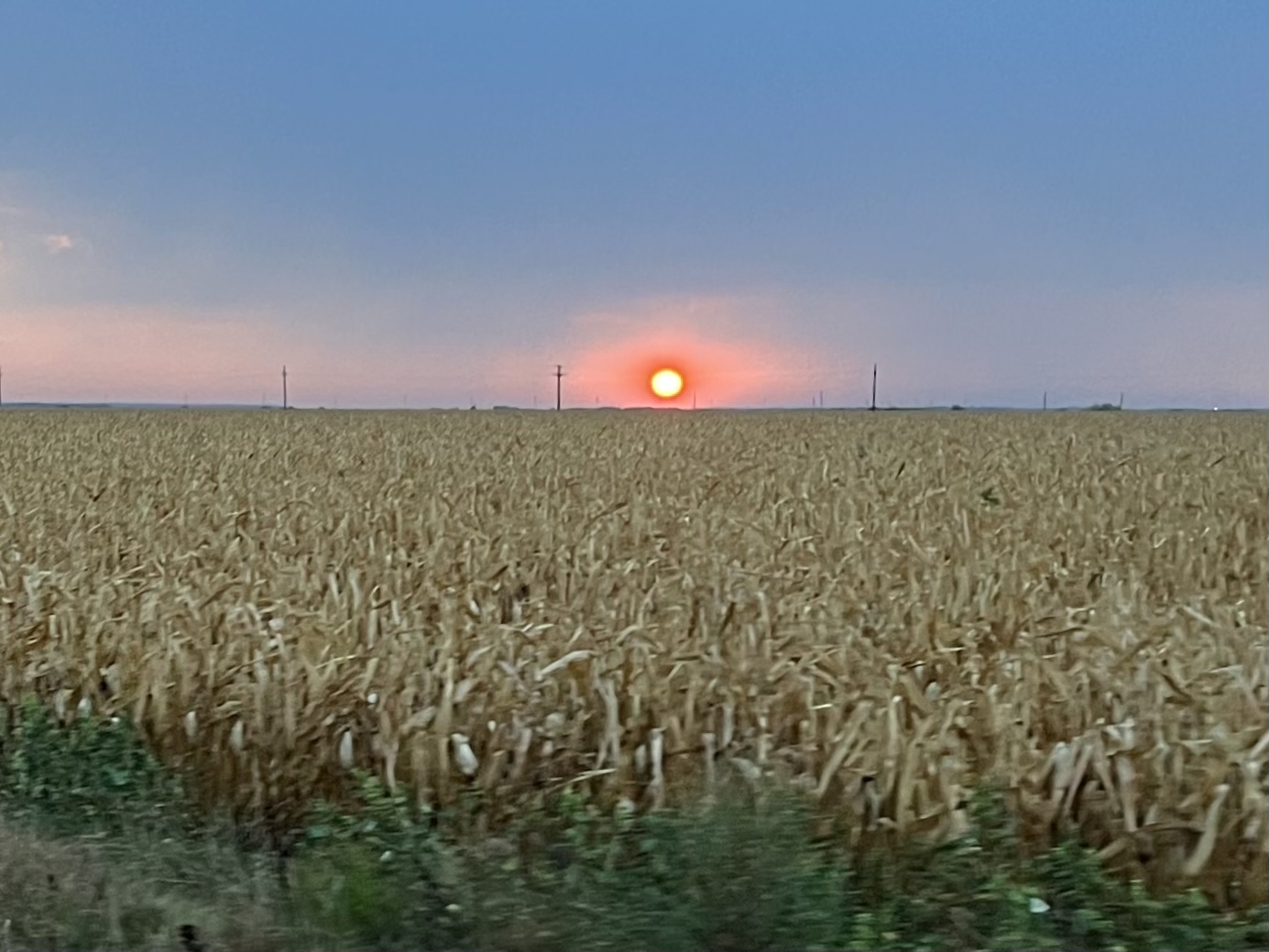
Soon we were back in Colorado and greeted by brisk winds. Happily, they were mostly crosswinds. Spreading across the road in semi-organized echelons with the strongest riders on the wind side, we made good progress through the winds. Too much fun at ever more frequent stops proved the more serious impediment to forward progress. Stop 14 miles past St Francis at state line for photos? Check. Stop 14 miles later at Idalia control for snacks and ice and nice conversation with the friendly store clerk? Check. Stop 24 miles later in the town of Joes for photos and to make "eat-at-joes" jokes? Check. Stop 11 miles later in Cope for soup and sandwiches in the nice little cafe in the store? Check. Stop 20 miles later at the Anton store control for refreshments including beer? Check.


The group of riders with which I would finish the ride had coalesced by now. Hamid, Ian, the two Pauls, and I proved to be quite compatible. With some trepidation we left the Anton store for the 55 miles leading to the third overnight. Our sense of dread about the rollers and net elevation gain between Anton and Byers (back up to 5000ft) proved unwarranted as we powered through this section feeling great. Along the way, I noted a comment posted online by Amy Pieper back home - "Where is the suffering?" Apparently it would have to wait for another day.

Arriving in the daylight a bit after 7pm meant that we had nearly 26 hours to ride the last 100 miles to the finish. Many riders saw personal best times in reach or were simple eager to get the ride done; they planned short sleeps and early departures. We had other ideas. Over a delicious dinner of corn chowder, grilled sandwiches, pasta salad, cold beer, and other goodies served up by Eric Simmons and Bobbe Foliart, we argued and negotiated over just how late in the morning we could leave. The compromise reached was not to wait for breakfast to open in Byers, but instead to leave at 5am and seek breakfast 34 miles up the road in Prospect Valley. Surely we could get enough sleep with a 9+ hour overnight stop, a luxury previously unknown to me in my 12 years of riding brevets.

Saturday - 100 miles to the finish

Groundhog Day! We reached the Sodbuster Cafe in Prospect Valley only to be greeted by a sign: "6am - 2pm Mon-Friday - Weekend open soon." Aaargh! Off we rode to the next town, but only eight miles this day. In Keenesburg, we found yet another wonderful breakfast at the Korner Kitchen restaurant.

Just out of town after breakfast we rode headlong into the first real drama of the ride. All pretty experienced riders, we would know better than to say "wow, no flats" and thus taunt the tire gods. A reasonable corollary rule would be to avoid any statement like the previous night's "Sure we can spend 9 hours at the overnight. We'll have 16 hours to ride the last 100 miles. It would take a catastophic failure for that to be a problem." A mile past Keenesburg we noticed Ian's wheel out of true. An experienced bike mechanic, Ian found some loose spokes and looked for a broken one or other signs of damage. Instead we spotted this:


Uh-oh. Cracked hub?!? We could feel pretty foolish now for tempting "catastrophic failure," but putting our ride-fried heads together we formulated a plan. First, we added the ziptie seen in the picture in hopes of retarding the progress of the crack. Then we called ride central back in Louisville to inform them of our trouble and to beg for some help. John Lee Ellis, who had finished much earlier (around midnight), offered to bring a replacement rear wheel to the next control in Platteville. Ian rode as gingerly as possible towards Platteville to meet him.

Outside of Platteville we encountered rain that would stay with us for the rest of the ride. Not particularly substantial, it did give me an excuse to put on a few extra items that I had carried unused for 700 miles - wool headband, toe covers, overmitts, etc. (I did keep the raincoat safe and dry in my bag.) The rain also gave us an excuse for a long lunch stop at the cafe in the control. Finally at 2:45pm, barely the worse for wear, we showed up at the finish at John Lee's house. Not the most scenic or challenging 1200 I'd ever done, but certainly one of the most fun.


Paul Shapiro, Ian Shopland, me, Hamid Akbarian, Paul Rozelle


Postscript: My ride wouldn't be complete without a nerdy time-motion study courtesy of my Garmin 705 GPS. The GPS was aided on the Last Chance by my latest gizmo, the V4 power pack and universal cable from PedalPower+ in Australia. Using the PedalPower+ stuff, I ran the GPS continuously for 84 hours. Attaching the cable (with appropriate adapter tip) between my hub and the GPS charged the GPS during the day. At night the generator powered my light and the GPS ran off its internal battery. The cable could also charge the power pack allowing the stored energy also to be used to recharge a phone etc. Very nice setup.


More photos from the ride are here.

Saturday, September 5, 2009

Less Traveled


THE SNOW LEVEL WILL FALL TO AROUND 6000 FEET BY SUNDAY... AND ONE TO TWO FEET OF NEW SNOW IS EXPECTED TO FALL ABOVE THE SNOW LEVEL.


With the weekend forecast looking decidedly non-summer-y, I thought that sneaking up the back roads to Stevens Pass on Friday sounded like a good idea. So did Lyn Gill, Michael Huber, Jeff Loomis, Vincent Muoneke, who joined me at Duvall for the ride.

Earlier this summer, Geoff Swarts had created an up-and-back 200km permanent to Stevens Pass. From just before Skykomish up to the summit, sections of the old highway are still open and make a nice alternative to US-2. Along with the back road from Gold Bar to the control at Index, these sections provide a wonderful diversion from the highway.


First we left the highway before the narrow tunnel and crossed the river toward the Money Creek campground for the back way around Skykomish.


After Skykomish and before Scenic, there is a lovely and well maintained section of the Old Cascade Highway. Although it provides access to the Iron Goat Trail, we saw only two or three cars, one of which was parked.


After rejoining the highway for a very short stretch, we left for the section of the Old Cascade Highway that loops up over the railroad tunnel and heads for the summit. A bridge on this old road is gone, replaced by this lovely wooden structure too narrow for cars.


Although vehicles can access the road from either end, the lack of through access means very little traffic on a lovely road up to the summit. We saw one car and used the whole road.


Of course, there was espresso. At Vinaccio in Sultan on the way up.


And lunch. At Skykomish Deli on the way down.


Wednesday, September 2, 2009

Maintaining my figure

"With all your riding, shouldn't you be a lot lighter?" A simple question, as my roommate at PAC Tour Desert Camp this spring tries to reconcile my stories of randonneuring with their Clydesdale-ish teller.

Probably so, I guess. But I really like to eat. Yesterday Amy and Robin Pieper joined me for a 200km permanent (#624) that loops from Arlington up to Bellingham and back. The Piepers claimed not to have been riding but were quite speedy.


After 45 kilometers, we stop in the control town of Sedro Wooley at a bakery cafe. I order an apple fritter larger than my head to go with my latte. The clerk hands me the fritter in a bag, then realizes that we are planning to sit and eat. She puts the fritter on a plate but gives me the bag anyway. "No one finishes those; you'll need the bag." I didn't.


In Bellingham, we met Dan Turner for lunch at the Mambo Italiano Cafe. I have the spaghetti carbonara, a caesar salad, a pint of Mac & Jacks, and bread and olive oil while waiting. After the meal, Robin gets the check. I look over his shoulder. Nearly half the bill for our party of four is for my stuff.


A lovely, scenic 200 kilometer ride with nice views along Lake Whatcom and Chuckanut Drive consumes 9900 calories according to my GPS. The Garmin provides a wealth of information, but it doesn't provide a net calorie reading. If it only knew what was happening during those zero kph pauses.

Sunday, August 30, 2009

Nice Day

Simple pleasures. 200 kilometer Hood Canal Loop permanent. Good riding companions. Coffee en route. Ice cream in Hoodsport. Beer at the end. Early rain yielding to sun.

Pre-ride coffee - Seattle ferry terminal


On Common Grounds in Chimacum with riding companions Noel Howes, Ward Beebe, Joe Platzner, Greg Cox, and Andy Speier.

Thanks, Greg, for organizing.


Saturday, August 15, 2009

Super Brevet Scandinavia 2009


Riding a 1200km brevet after more than four weeks off the bike - not a single pedal stroke - appeared to be a bad idea, but I had a theory. Spending four weeks on a wonderful family vacation in South America would be restful and rejuvenating. Spending nearly a week of that vacation above 3000 meters elevation, including a four-day trek to Machu Picchu with climbs to over 4000 meters would build red blood cells. The combination of the rest and the natural blood doping would set me up perfectly for the event. Okay, so it was more a hope than a theory, but it's what I had, so I was going with it.

BEFORE THE RIDE

I nearly didn't get the chance to test the theory. Just as we started our South American vacation, I discovered that I had been watching the wrong Danish randonneur website. I probably should have wondered why no signup formalities had been posted, but sometimes I can be a bit casual about these things. Or perhaps, too willing to assume that others are being casual. I spoke to my Danish randonneur friend Stig Lundgaard four weeks before the brevet and discovered two things - the ride was full and anyway I had probably made air reservations for the wrong day. You are arriving in Copenhagen Thursday, he noted, and the ride starts 500 kilometers away on Friday morning with a pre-ride meeting on Thursday evening. Oops.

Stig is one of the great guys of randonneuring. He's incredibly accomplished, with more than 20 grand randonnees (1200km or more) completed at only about 40 years of age. These have included 4 Paris-Brest-Paris finishes, including at least one at right around 50 hours. Although it's possible that he and I met at PBP in 1999, our friendship started with a meeting in Australia for the 2001 Great Southern Randonnee. A stronger rider than I, he was nonetheless behind me when I turned around after Port Fairy to DNF the ride. He saw me riding the wrong way and endeavored to persuade me to continue. Of course, I persevered in my determination not to persevere on the ride. Our paths would cross at numerous events since 2001, and Stig would never fail to remind me that it was "stupid" to turn around. Never said in a mean way, that comment matched perfectly my view of that long-regretted decision.

At Boston-Montreal-Boston in 2002, I arrived late to the Bullard Farm control on the third night. I was cold, wet, and way behind my riding buddies as a result of a mechanical problem. Knowing that I wouldn't have time for a long sleep, I passed out on a chair instead of seeking a better place to sleep in the control. A photo captured this not very pretty sight. That photo has illustrated this blog since its inception (see right) because it reminds me of a lot of things that I have learned about this sport. One is about how one can feel pretty good on a brevet after feeling pretty bad - the next day I felt great and took, according to my friend Peter McKay, a fifty-mile, beer-at-the-finish-inspired pull of our little four person group most of the way home. It also reminds me, and this is the reason I bring this up here, of the great care that randonneurs take for each other. Shortly after the photo, I awake to the gentle crinkling of paper. Stig, Mr. 50-hour PBP, is stuffing newspapers into the wet shoes of Mr. 86-hour PBP (me), not just offering unsolicited but welcome help to dry the shoes, but also teaching me a little trick of the trade. In the years that I've been involved in the sport, I've witnessed (and been the beneficiary of) many instances of such kindness and instruction, but that one has always stuck with me.

As I said already, Stig is one of the great guys of the sport. So I suspect he may have had a role events leading to the e-mail that I received about 10 days after our call. From Per Rasmussen, the organizer of the 2009 SBS, in key part it read, "We have some participants who have canceled. So if you are quick, you can make a registration." Sweet. Stig also let me know that I could stay with him and Trine while in Denmark and that he would assist with all the pre-ride logistics. I delightedly informed my family that I was SBS-bound. On hearing how soon after our trip I'd have to leave (on a Tuesday morning after arriving home on a Sunday evening), my family gave me the "you're nuts, you know" look that I know so well. An e-mail to Jon at SVC ensured that my bike would already be in a travel box when I returned from South America.

After some frantic packing, several plane rides, great hospitality from Stig and Trine, and a long drive (I had no idea Denmark was that big), I arrived Thursday afternoon at the ride start location in Frederikshavn on the east coast of Jutland, facing Sweden across the Kattegat.

With not much happening at the start hostel, I headed out for a stroll by the harbor. Looking for inspiration, I spotted the Northern Vitality. Sounded good.

As I had been in Copenhagen, I was amazed by the number of bicycle riders everywhere. Riders came past of every description. I did a double take as one rider went past me on one of the zillions of bicycle lanes I would see in Scandinavia. "John?" I asked his back.

Sure enough, the rider brought his fixed gear bike to a stop and I had a chance to connect with John Evans, a Brit now living in Australia. I also met him for the first time at the GSR in Australia in 2001 and have seen him at several events since. Not content to rest on his laurels as a rock star and successful businessman, John is now one of the overachievers of the rando world. The SBS would be his 27th grand randonnee (I think). More astounding to me, however, was that it would be his third within five weeks; he had just completed the Gold Rush in California and London-Edinburgh-London in the UK.

The reunion quality of these grand randonnees was further evident later that evening, when I saw Jan-Erik, a Dane living in Sweden whom I had met at the 2008 GSR in Australia. He brought along Russ Hamilton from Australia. In 2008, Russ had hosted him for the GSR and now Jan-Erik was returning the favor. Along with one rider from Finland and one from Germany, John Evans, Russ Hamilton, and I constituted the non-Scandinavian contingent for the ride. Most riders were from Denmark. There was a decent sized group from Sweden and two riders from Norway. I think there were 46 starters in all.

My bike was ready to go.


DAY ONE - The Theory Springs Holes

The stories I had heard of the ride told tales of riding like crazy to make ferries, resting on the ferries, and repeating. Most of these ferries, as I would learn, are on the first day of the ride. Even now, the route only makes sense to me with a map.
We would ride generally south along the east side of Jutland, including two short ferry crossings, to Ebeltoft where we would take a longer ferry ride to Zealand (the main island of Denmark). We would ride generally east along the north edge of Zealand, with another shortish ferry crossing, until we reached the Helsinger-Helsingborg ferry that would take us into Sweden, where we would ride another 65 kilometers to the first overnight stop in Laholm. There would be five ferries in the first 275 kilometers. Of course we would get no credit for the distance covered by the boats, but we would also get no allowance for the time spent waiting for or riding on the ferries.


None of this seemed especially concerning at the start, however. A group of Danish riders invited me to head out with them and we started at a ripping pace ahead of most, if not all, of the other riders.

As we approached the first ferry near Aalborg at 58km, they told me that their plan was to make the 2PM long ferry at Ebeltoft (190km). At the pace we were going (well over 30kph average), that would be no problem at all. No other riders joined us on the ferry, so we were still at or near the front of the pack.


In the sixty kilometers or so before the next ferry, the rest-and-altitude-training-will-be-enough theory sprung a hole big enough to let the North Sea flow through. Not only did I let my riding companions know that I would have to drop off, before long I also watched as dozens of riders passed by me as if were on a kid's trike. I boarded the second ferry alone.

After the second ferry, I found myself alone in the wind and busy calculating that not only would I not make that 2PM ferry at Ebeltoft, I wasn't likely to make the 3PM one either.


As a rule, I don't mind riding by myself on long brevets, but I was struggling to maintain a positive mental attitude as my pace dropped further and further and the field moved away from me. As I neared Ebeltoft, I rode along a bay with a number of nice beaches. Lots of folks were out enjoying the beautiful day and I started to think that hanging out on the beach would be more fun than struggling through the ride against my lost fitness. Not where I wanted my thoughts to go wandering.


In the last 15 km or so to the Ebeltoft ferry, another group of seven Danish riders (three women and four men) swept me up. I had some hope of a group to join. They dropped me in the last 3-4 km to the ferry. I could see that we'd be on the same 4PM ferry (it was just past 3PM and we could see the 3PM ferry heading off), but my inability to hold their pace suggested that I'd be riding alone once we reached the other side.

Watching five of the seven riders light up cigarettes while waiting for the ferry did nothing good for my attitude. Waiting for the ferry, we were joined by Lasse and Annie, father and daughter from Sweden. (I did not know it at the time, but a small handful of riders, who had spent part of the day lost, would not cross until the 5PM ferry).

Happily for me, I could ride with some or all of these riders for the last 150km of the day, including two more ferry crossings. Here's the first.

Waiting for the 22:10 ferry (#5 for the day) to cross from Helsinger, Denmark to Helsingborg, Sweden at 275km into the ride, I realized a couple of things. First, the sky was dark. The advertised possibility that the ride, which was all north of the 55th parallel) could be completed mostly without light would be reserved for other riders, not for me. Second, my pace including stops had barely topped 18kph for the day so far, considerably short of the 20kph minimum that I hope to maintain in the early part of a long ride to build cushion for sleeping, eating, and slowing down.

In a positive sign that my ride would improve, I found neither of these realizations discouraging. I don't think that I've ever done a brevet of 400km or longer without some night riding. Not only would this be nothing new, I have good lights and I like riding at night. And although I would prefer to go faster, 18kph pace for a 1200 leaves nearly 24 hours for sleeping and slowing down. Being at or near the back of the ride need not be discouraging, either. Via Facebook, my friends provided a good reminder. I had been posting updates on my (slowing) progress throughout the day. Jason Dul had commented on one such posting that I should follow his motto: "DFL is better than DNF." Words to live by. I resolved to keep posting updates throughout the ride - not wanting to post a DNF update might prove to be just the right motivation at some future low point.

In the ashes of my rest-and-altitude theory, I developed another one: My overall fitness was fine, I would just need time to get my long-sidelined legs back into riding. As another randonneur once told me, the advantage of a 1200km brevet is that you can use the first days to train for the last ones! I decided that my operating assumption was going to be that each day, I would feel stronger than I did on the one before. I was far from sure that this theory would hold any more water than the original one, but it would have to do. We found the overnight hostel at Lanholm around 1:45AM. I updated my Facebook status: "can get 3 hours sleep before breakfast. Woo-hoo."

DAY TWO - Finding the Way

The organizers' conception for the Super Brevet Scandinavia contemplates a common start each morning. We could expect a breakfast each day around 6AM and those who wanted to start together could head out around 7AM. For a brain-dead rider arriving late at night, this provides the further advantage of pre-determining all of the usual how-much-sleep / what-time-should-I-rise calculations. Our 1:45AM arrival had given me time for a warm shower, a pasta dinner, three hours of sleep, and a good breakfast before starting again. Over breakfast, I was the recipient of numerous sympathetic comments about my late arrival, but honestly, I felt pretty good to be back on the bike again.

I started out with the six remaining riders from the group of seven riders that had picked me up on the way to the Ebeltoft ferry. One, who had been sick but attempted the ride anyway, had headed home from Helsinger the previous evening. I was happy to have the company as we were able to pool our ignorance in navigating the often cryptic cue sheet.


It's always interesting to ride somewhere new where the cue sheets may follow different customs than those at home. Over the first day, I had tuned into the basic difference in format. On our SIR cue sheets, each line says, in effect, "at cumulative distance X, which is Y from the last cue, take the following action." The SBS cue sheet had distances at the end of the line and the syntax was "turn this way, you will possibly pass through these named towns or streets as you ride for distance A to cumulative distance B, at which point look at the next line for your next action."

Knowing the general approach was only part of the battle. I still might have to deal with a bicycle path which diverged from the main road on the cue sheet or which took me through an intersection in such a way that I could not see the signs. Or perhaps the road on which we should continue would take a left or a right at an intersection which was not noted on the cue sheet. I had one extra weapon in my navigation arsenal - my GPS. This might have solved my navigational challenges better but for one fundamental problem. I had programmed a track into the GPS based on a map of the 2005 route, not based on the cue sheet which I didn't have at the time. My track creation skills were less than perfect in the first place and then the route had changed, particularly on the way into some changed overnight control locations. At least, however, I could watch the map on the GPS and slow down to be more careful about navigation when the lines on the screen stopped following our actions on the road. When riding with others, I'd ask them if they were sure about the direction followed. Usually they were.

About 40 kilometers into the day, the line on my GPS made a left turn where the cue sheet was silent. I slowed the other riders enough to allow us to be the beneficiary of a course correction shouted from a porch by a bathrobed fellow who seemed bemused at all the cyclists that had been by in the morning. I found out later that this had been a good save; continuing straight, we could have reconnected with the route, but only after extra distance, some navigational guessing, and a long stretch of gravel road.


Twenty five kilometers later, we found a bakery in Torup and the opportunity for delicious baked goods, for water bottle refilling, and for a little sit and rest. (Also a smoke, but I wasn't tempted yet). Also coffee. Not to seem ungrateful, but frankly most of the coffee I had in Scandinavia was horrible. This cup was no exception, but I was happy to have it nonetheless. As we were preparing to leave, John Evans rode up. Unhappily for him, he had taken the extra distance, extra navigation, gravel road option earlier. Happily for me, John would provide good riding company as we rode more or less together for the next 100miles, both with and without our pack of Danes.


The "Welcome Bikers" sign outside Svenljunga beckoned around lunchtime.
However, it called to cyclists of the motor-assisted sort; we had apparently stumbled on the Sturgis of Sweden. In general, this was no problem. Like virtually all the motorists that I encountered in the three countries of the ride, the bikers were unfailingly courteous of us on bicycles. The bikers did make lunch a bit more complicated than usual. The restaurants were packed, making lunch a slow process. (Foregoing lunch was not even considered). Also, it would appear that Swedish bikers are untrustworthy with credit cards, so the stores and restaurant that I visited all had "no cards" signs out. I had been hoping that I could use my bank card to avoid getting a different currency in each of the three countries of the ride, but now I was reduced to going around to my fellow riders and begging for Swedish crowns.

Thirty kilometers later, completely befuddled by the bike lanes and highways on the way into the town of Borås, John and I stopped near the train station for our second attempt at asking a local for directions. The first had elicited a "yes, I think you could go that way, or perhaps this other way" response that had solved none of our confusion. The second time was a charm, however, as we received some very precise directions out of town to our next destination. Upon our successful execution of these directions, John suggested that we replace the cue sheet with the nice young woman that had provided them. I'm certain that his motivations were entirely navigational and had nothing to do with the striking nordic looks of our guiding angel.

On the way up the hill out of Borås, I stopped for a rest and John disappeared up the road ahead. I was now, to the best of my knowledge, dead last among the riders. The prestige of "lanterne rouge" designation provided small comfort, but the "better DFL than DNF" admonition was sufficiently motivating to keep me going to the convenience store control in Alingsås. Several riders were still there, providing me with connection to the field. The father-daughter Swedish riders provided good directions out of town before leaving.

Despite being last on the road, I felt pretty good. Fifty kilometers later, however, I found myself totally lost. The highway on the route sheet was clearly marked with a "no bicycles" indication. My GPS track was no help on this section where the 2005 and 2009 routes diverged substantially. Following the bike route that I vainly hoped might lead back to the highway, I was soon dodging Saturday night party-goers on the cobbled streets of Trollhattan. And I had not even reached the two ominous sounding cues on the route sheet that both identically read "Y-kryds ved ôre Sjö - ingen kendteskilte/no known signs." Whatever that might mean.

Finally I gave up all hope of finding the route and programmed the overnight hotel into the GPS and beseeched it to find me a way there. Which it did. I'm convinced that it found the darkest, hilliest, most deserted route to the overnight stop, but it got me there. After gingerly carrying my bike downstairs to the basement for the second night in a row, I was directed to the room I would share with John Evans. It appeared that he had not preceded me there by too much and I was soon showered and down in the dining area sharing lasagna and beer with the other late arrivals. With only 305km on the second day, it was not even 1AM when I went to bed with the prospect of nearly 5 hours of sleep.

A word about the support on this ride. To my amazement, the entire support crew consisted of organizer Per Rasmussen and his wife and daughter. They would drive the bags to the overnight location and then split duties. The women would care for us on arrival each night, then sleep. Per would sleep first and then care for us at breakfast. The good humor and helpful assistance offered by Betty and her daughter even to the latest arrivals each night cheered me tremendously. Thanks to them.

DAY THREE - Getting Better

With almost 350km to cover, Sunday would be the longest day of the ride. (In prior years the second overnight was further along the route, providing a more normal distribution of distance than the 340/305/346/230 of the 2009 edition). Seventy kilometers after breakfast would be the first control of the day in Ed, which seems like a friendly name for a town and which was the last control in Sweden. I rode some of this stretch with John and the six Danes and some alone. I felt pretty good and was content with my exploration of the better-each-day hypothesis. The camera suggests a somewhat grimmer determination:

After entering Norway, the route ran north for a while along the Iddefjord which separates Norway from Sweden (which, to my modest confusion, is to the west of Norway here). As a cool drizzle settled in and as the route added more hills (short rollers), I could feel my legs coming back. It was a nice sensation to hit the rises pretty hard and feel good doing it. We enjoyed a nice lunch stop in Halden, Norway. We waited a while for one of the Danes, who was not feeling as chipper as the rest of us, but before long we were pushing on to the control in Rakkestad (km 813), which we reached before 4pm.


After Rakkestad, the route headed north east of the Glomma (largest river in Norway) to Askim before turning south and then west to the last ferry of the brevet at Moss. Along the way, I lost track of my riding companions. John rode off ahead and the others stopped somewhere. I also blithely followed the cue sheet on roads clearly not meant for bicycles rather than repeat the bike path misadventures of the previous evening. As a result, I found myself the lone rider on the 7:30 ferry from Moss to Horten across the Oslofjord. A beautiful sky beckoned.


With 100km to go from Horten to the overnight, I was expecting, but not dreading, a long evening of riding. Once off the ferry, I again followed the highway instead of the bike paths for the first part of the route out of town. In the middle of a no-shoulder tunnel, this started to seem like a really bad idea, but I survived. About 15 km or so after the ferry I came upon the father-daughter cyclists having an animated discussion in Swedish. For my benefit, Lasse summarized: "This is shit!" he said, pounding the route sheet. Apparently they had spent at least a half hour lost in the last town. It was also apparently not their first such incident of the day. They had started the day early before breakfast and were clearly not happy to be losing time. I suggested that we pool our navigational resources and ride together, at least to the next control in Larvik. They liked the idea of having a GPS on their side, so off we went.

Happy to say, our navigational misadventures were few and short before we found the lovely, if hilly, road into Sandefjord and the much less scenic road from there to the next control in Larvik. We arrived in Larvik around 11:30 or so to discover that the ferry terminal (for a ferry to Denmark) that was suggested as the control point had long since closed for the day. After much perplexed wandering, we found a gas station / convenience store and proceeded to fritter away time unnecessarily.

The last 35 kilometers of the day seemed much longer. A series of seemingly gratuitous descents and climbs eventually gave way to a long flat stretch into Skien, our overnight control town. A pretty good rain started just as we were wandering around, quite confused and lost, within 100 meters of the control location. It was nearly 3AM when I stumbled into my room for a shower before dinner. They planned to send John in to share it with me when he arrived. (I never saw him, and found out later that it was 8AM before he came through the control, asked for his bag so he could change to dry gloves, and then immediately headed out again.)

DAY FOUR - Feelin' Groovy

After my shortest sleep of the ride, I joined most of the other riders for breakfast, again receiving sympathetic comments for my late arrival. Others had arrived later, however, and even some of the earlier riders had chosen to sleep longer. So with a quick breakfast and an eagerness to "git 'er done," I left at about 6:30 for the 230km push to the finish. The report on the remaining course forecast a hilly, challenging 105km to the control at Treungen and then an easier 125km to the finish. Although a few left before me, I was one of the first riders on the road.


The first 60 kilometers included some of the hilliest and prettiest riding on the brevet leading to the town of Drangedal. (In a sign of my mental decomposition, I found the name of the town hilarious. "Where did the beer go?" "We Drangedal!" This amused me for longer than I care to admit. Then this:


"Phenomenal cycling power. Itty bitty living space." Ha. Ha. Laughter is a sign. Of delirium, perhaps.

To my surprise, I saw only a handful of riders go by along this stretch and I was feeling pretty full of myself when I stopped for a mid-morning snack at a convenience store. A huge pack of riders came in as I was leaving and I vowed to conserve enough energy that I could hang onto at least some of that group when it came by later.


The forty kilometers to Treungen included the most sustained climb of the ride, up 500+ meters to the alpine ski resort of Gautefall. To my further surprise, only one rider came by me on the way up the hill or down the other side. It must be my intensely competitive nature, but this further improved my good mood of the day.


Just before the control, the route sheet said to take a left onto 41 and go 1 km to the control at Treungen. With local knowledge, other riders instead went right a short ways where they could find many control options. Following the route sheet to the left, I found just one, a gas station/convenience store. Once again, however, the quality of the offerings pleasantly surprised me as it had at many a convenience store along the route. A less pleasant surprise was the reaction of the clerk to my request for a stamp. "It is not usual," he said and made it clear that no amount of pleading would yield a stamp. I settled for a receipt and made my way down the road.

In the next stretch I was overtaken by one rider and then swept up by a group of three Danish riders. These included Per and Flemming who were in the group with which I had tried to ride on the first day. I recalled, and was reminded at the next control, that Per was the one who would smoke a pipe at each stop. Apparently this works well for him; he has many 1200s to his credit.


The third rider was Thomas, who wanted to know if I knew Brian Ohlemeier in Seattle. Thomas had ridden part of the way to Brest with Brian at PBP 2007 before dropping off, but still finishing in a fast time. Latching onto these guys was a kick. They were strong and fast, but with few hills remaining (and perhaps a helping of discreet assistance), I could stay with them.


We rode into the penultimate control at a campground. In 2005, there had been a camp store and possibly more. In 2009, we instead found a common room showing signs of a desultory renovation project. The man who greeted us, however, was quite enthusiastic to hear of our ride. Apparently he was also delighted to learn that I had come from the USA and that a rider from Australia was just behind. He reported that it had been over ten years since he had seen an American and that he had never ever seen an Australian. He insisted on making a pot of coffee for us. Thus stoked for the 75 km homestretch, we headed out.


Following the Tovdalselva river to the sea, we zipped along the scenic and flat next section of the course. To my surprise, Thomas called for a food stop in Birkeland, only about 30km from the end. Jan-Erik and Russ rolled up with another rider. I had a soda while some riders waited for real food. Seized by stiffening legs and by a burning desire to finish the ride, I took off alone, figuring I'd see the others soon.

At an intersection less than five kilometers from the finish, I studied the signs, the cue sheet, and the GPS for hints about the route. Finally, I headed off downhill to the right. Before I got far, I heard my name being called and looked around to see Jan-Erik racing down from the intersection after me. He escorted me back up and pointed the correct direction (uphill to the left). Thus saved from much lost wandering, I happily followed him and Russ and the other rider to the finish, where we arrived at 7:20pm, nearly 85 hours after starting this adventure.

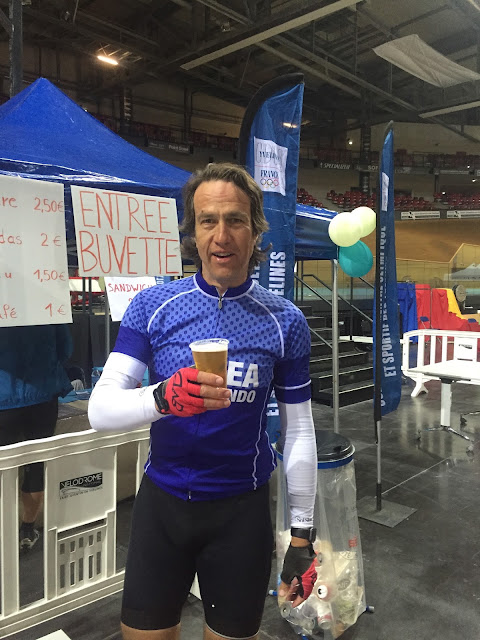
Celebratory beer ensued.


But the harder the battle you see
It's the sweeter the victory, now

You can get it if you really want
But you must try, try and try, try and try
You'll succeed at last

1200km Beer

After seeing a picture of me at the finish of the Super Brevet Scandinavia with a beer in hand, Tom asked what kind of beer I drink at the end of a 1200. The honest answer, of course, is whatever's handy, but I thought back to see if I could reconstruct a more specific answer.

1999 PBP - 1664, on draft back at the Campanile
2001 LEL - I don't recall the draft beer at the nearby pub
2002 RM - Heineken, handed to me by the late Roger Street
2002 BMB - Sam Adams, a ride sponsor
2003 PBP - 1664, on draft back at the Campanile
2005 C12 - Alaskan Amber
2006 BMB - Sam Adams, ride sponsor
2007 PBP - 1664, on draft back at the Campanile
2008 GSR - Cascade Premium Lager (Australia)
2009 SBS - Tuborg

Boy did they all taste good.